
By Godson Azu
Introduction: A Democracy at a Technological Crossroads
Every generation of Nigerians has wrestled with the same existential question: Can our votes truly count?
In an era where technology has transformed banking, taxation, education and commerce, elections remain one of the last strongholds of institutional opacity in Nigeria. The debate over mandatory real-time electronic transmission of results from polling units to INEC’s Result Viewing Portal (IReV) is therefore not a mere technical dispute. It is a defining struggle over the soul of Nigeria’s democracy.
At stake is whether Nigeria will entrench transparency by law or preserve discretionary loopholes that historically enable manipulation.
As former US President Jimmy Carter once observed:
“The integrity of the election process is the foundation of democracy itself.”
Nigeria now stands before that foundation.
Understanding Electronic Transmission and the IReV System
Electronic transmission refers to the upload of polling unit results immediately after counting, directly to INEC’s digital platform (IReV) using the Bimodal Voter Accreditation System (BVAS) or other approved devices.
The logic is simple:
1. Votes are counted at the polling unit.
2. Results are signed by party agents and officials.
3. Results are instantly uploaded to a public portal.
4. Physical copies still move through collation centers, but digital copies already exist as immutable reference points.
This process drastically reduces opportunities for result alteration during transit.
INEC Chairman Mahmood Yakubu captured this logic succinctly:
“Technology has helped us to improve transparency and reduce human interference in the electoral process.”
The Legal Terrain: What the Law Says – and What It Fails to Say
The Electoral Act 2022 permits INEC to use technology for accreditation and result transmission. However, it does not explicitly mandate real-time electronic transmission.
The National Assembly recently considered an amendment that would have made real-time upload compulsory. While the House of Representatives supported this position, the Senate rejected the clause, deleting the phrase “real time” and leaving the matter to INEC’s discretion.
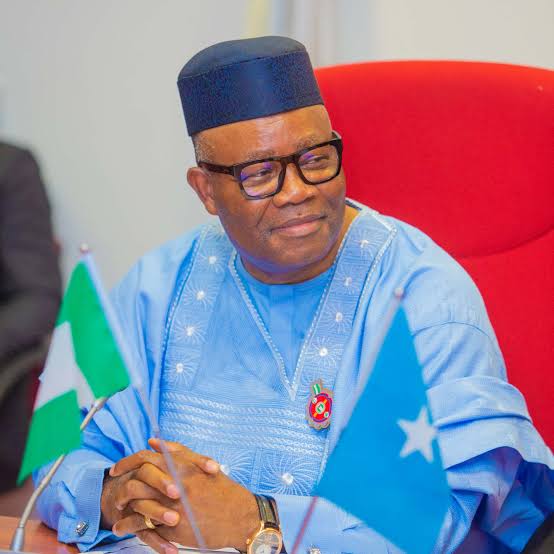
Senate President Godswill Akpabio defended the decision:
“The Senate did not reject electronic transmission. We only removed ‘real time’ and allowed INEC the flexibility to decide what works best.”
Legally, this distinction is monumental.
• Permissive law says INEC may transmit electronically.
• Mandatory law says INEC must transmit electronically in real time.
One creates discretion. The other creates obligation.
As legal philosopher Lon Fuller warned:
“A law that is uncertain or vague invites manipulation and arbitrary power.”
By refusing to mandate real-time transmission, lawmakers have effectively preserved legal ambiguity—fertile soil for electoral disputes.
Political Implications: Reform vs Self-Preservation
Politics is about interests. Electoral reform is about limiting how those interests are pursued.
Mandatory real-time transmission would significantly shrink the political space for:
• Result swapping
• Collation center bargaining
• Sudden “miraculous” turnarounds
• Manufactured landslides
It is therefore unsurprising that resistance emerges from political elites who benefit from the old order.
Former presidential candidate Peter Obi captured this sentiment:
“If you are confident you won at the polling unit, why are you afraid of uploading the results immediately?”
The controversy has transformed into a broader referendum on elite sincerity about reform.
When legislators argue that Nigeria lacks infrastructure for real-time transmission, critics counter:
• Banks move billions daily online.
• Telecom companies process millions of transactions per second.
• Nigerians stream live videos from remote villages.
The infrastructure argument increasingly appears political rather than technical.
Democratic Implications: Trust Is the Real Currency
Elections are not merely about producing winners. They are about producing legitimacy.
Political theorist Robert Dahl noted:
“Democracy is not only about voting; it is about institutions that guarantee that votes are counted as cast.”
Without real-time transparency, citizens are asked to trust a process they cannot verify.
This has three dangerous consequences:
1. Voter Apathy – People stop voting because they feel outcomes are predetermined.
2. Post-Election Violence – Suspicion fuels unrest.
3. Democratic Cynicism – Citizens disengage from governance altogether.
A democracy without trust is merely a ritual.
Are Akpabio and Allied Legislators Denying Nigerians a Free and Fair Process?
The word “deny” is heavy. But consequences matter more than intentions.
By blocking mandatory real-time transmission:
• They preserve a system where results can still be contested between polling units and collation centers.
• They weaken legal protection for digital transparency.
• They reinforce public suspicion about elite manipulation.
Whether by design or by miscalculation, the effect is the same: reduced confidence in electoral integrity.
As Chinua Achebe warned:
“The trouble with Nigeria is simply and squarely a failure of leadership.”
Leadership is not about procedural cleverness. It is about moral clarity.
International Best Practice: Where the World Is Going
Countries such as:
• Brazil
• India
• Ghana
• Kenya
• South Africa
have progressively moved toward rapid or real-time digital reporting of polling unit results.
The global direction is clear:
Transparency must be instantaneous.
Nigeria risks moving against history.
What Must Be Done Before 2027
1. Amend the Electoral Act to explicitly mandate real-time electronic transmission.
2. Back the mandate with criminal penalties for non-compliance.
3. Strengthen network partnerships with telecom operators.
4. Open IReV architecture for independent auditing.
5. Train and certify all polling officials on digital procedures.
Democracy must be engineered, not improvised.
Conclusion: The Choice Before Nigeria
This debate is not about Akpabio alone. It is not about parties. It is not about personalities.
It is about whether Nigeria chooses:
• Transparency over tradition
• Institutions over individuals
• Future over fear
History will remember those who expanded the democratic space and those who shrank it.
As Thomas Jefferson wrote:
“The price of freedom is eternal vigilance.”
Nigeria’s vigilance today is called real-time electronic transmission.
Anything less is a gamble with the republic.
By Godson Azu
UK based Political & Public Affairs Analyst