By Godson Azu
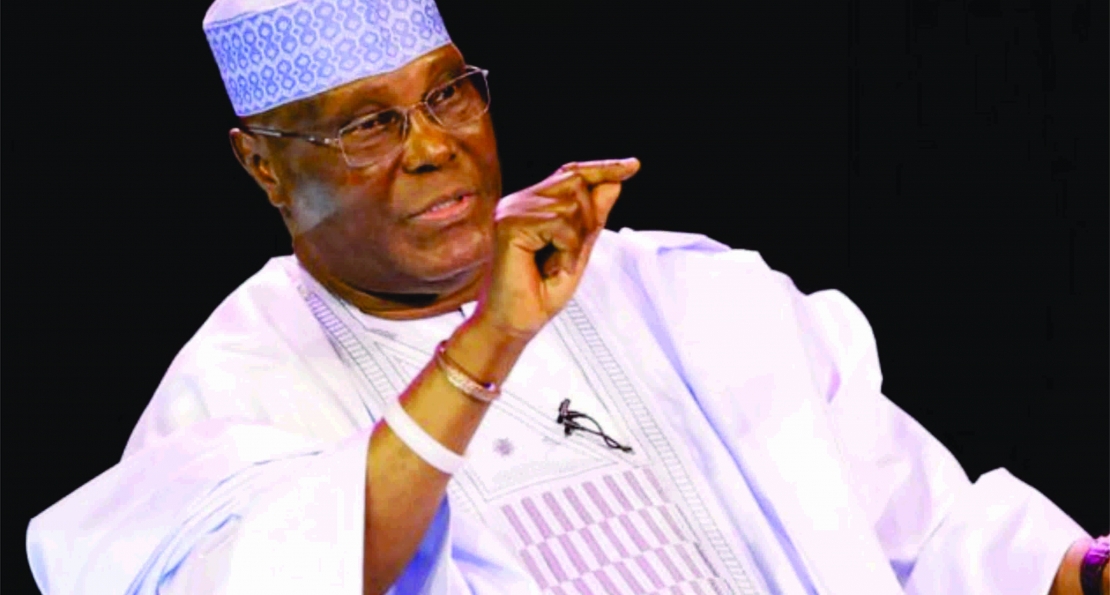
The unfolding political conversations ahead of Nigeria’s 2027 general elections have once again brought the name of Atiku Abubakar to the centre of national discourse. For many political observers, his continued presidential ambition reflects remarkable resilience and consistency. For others, however, it raises serious questions about timing, political calculation, regional balance, and the unwritten understanding surrounding power rotation between Northern and Southern Nigeria.
Since Nigeria’s return to democratic governance in 1999, the issue of zoning and rotational presidency has remained one of the most sensitive pillars sustaining the country’s fragile political equilibrium. Though not expressly written into the Nigerian Constitution, the principle has served as an informal political arrangement aimed at promoting inclusivity, reducing ethnic tension, and preserving national unity in a country deeply divided along regional, ethnic, and religious lines.
It is within this broader national context that the persistent presidential ambitions of Atiku Abubakar continue to generate intense debate, especially after his unsuccessful attempts in 2007, 2011, 2015, 2019, and 2023. Should he contest again in 2027, it would effectively represent a sixth major democratic attempt at the presidency under the Fourth Republic.
The Historical Context of Power Rotation in Nigeria
Nigeria’s political history demonstrates that regional balancing has often been considered essential for national stability. Following the return to democracy in 1999, power initially shifted to the South-West with the election of Olusegun Obasanjo, who served two terms from 1999 to 2007. Power later returned to the North after the presidency of Umaru Musa Yar’Adua in 2007.
After Yar’Adua’s death in 2010, Goodluck Jonathan from the South-South completed the term and later won the 2011 election, an outcome that generated considerable political tension in parts of Northern Nigeria, where many believed the North should complete its turn under the rotational principle.
In 2015, Muhammadu Buhari emerged as president and completed two terms from 2015 to 2023, thereby restoring the North’s eight-year cycle under the informal zoning structure. Consequently, many political stakeholders believed that equity and political fairness demanded that power should return to the South in 2023 and remain there until 2031.
This argument became one of the strongest political narratives leading into the 2023 elections.
The 2023 Elections and the Southern Presidency Argument
The emergence of Southern presidential candidates in 2023 was widely viewed by many Nigerians as consistent with the spirit of rotational leadership. However, Atiku Abubakar’s decision to contest under the platform of the Peoples Democratic Party altered the political dynamics significantly.
Critics argued that his candidacy weakened the zoning principle and intensified regional political divisions. Supporters, on the other hand, maintained that Nigeria’s Constitution guarantees every eligible citizen the right to contest for political office irrespective of region, ethnicity, or religion.
This constitutional argument remains valid. Yet politics in Nigeria has never operated solely on constitutional legality; it has also depended heavily on political consensus, informal agreements, elite negotiations, and regional accommodation.
Many Southern political leaders interpreted Atiku’s 2023 candidacy as an attempt to interrupt the Southern turn after the North had just completed eight uninterrupted years under Buhari’s administration.
Ultimately, the 2023 election produced Bola Ahmed Tinubu, a Southern candidate from the South-West, reinforcing the broader sentiment that power should remain in the South for another term before returning North.
Why Atiku Has Struggled to Win the Presidency
Several political analysts have identified multiple reasons why Atiku Abubakar has repeatedly failed to secure the presidency despite his national visibility, political experience, and extensive network.
- The Burden of Political Timing
Atiku’s presidential ambitions have often collided with prevailing national sentiments regarding zoning and regional balance. In both 2019 and especially 2023, many voters prioritised regional equity over individual political credentials.
In politics, timing can be as important as competence. A candidate may possess national appeal but still struggle when public sentiment favours another geopolitical region.
- Trust and Political Perception
Despite his long political career, Atiku has continued to battle trust deficits among sections of the electorate. Critics frequently portray him as part of Nigeria’s old political establishment at a time when younger voters increasingly demand generational change, institutional reforms, transparency, and governance innovation.
The rise of youth-driven political consciousness during the 2023 elections demonstrated growing frustration with traditional elite politics.
- Internal Party Divisions
The internal crisis within the PDP during the 2023 elections significantly weakened Atiku’s chances. The disagreement involving the G5 Governors and unresolved zoning disputes within the party created deep fractures that undermined electoral unity.
Political parties entering elections without internal cohesion often struggle to mobilise effectively across Nigeria’s complex electoral map.
- Changing Electoral Dynamics
Nigeria’s political landscape is evolving rapidly. Social media influence, youth mobilisation, diaspora engagement, digital activism, and economic frustrations are reshaping voter behaviour. Ethnic loyalty alone no longer guarantees electoral victory.
The 2023 elections demonstrated that urban voters, first-time voters, and economically frustrated citizens are becoming increasingly influential in determining electoral outcomes.
Why 2027 May Present Greater Challenges
Looking ahead to 2027, the political environment appears even more complicated for any Northern presidential aspirant, including Atiku Abubakar.
If President Tinubu seeks re-election, many Southern political leaders, governors, business elites, and regional blocs are likely to rally behind the argument that the South must complete its constitutional eight-year cycle for the sake of political balance and national stability.
This position may receive support not only in the South but also among Northern politicians who recognise the importance of preserving rotational understanding to avoid future instability.
Additionally, Atiku would face the realities of age, voter fatigue, and the emergence of new political actors seeking generational transition in Nigerian leadership.
The Future of Zoning in Nigerian Politics
The debate surrounding Atiku’s ambitions also raises broader questions about the future of zoning itself.
Some political reform advocates argue that Nigeria should move beyond regional arrangements and allow competence alone to determine leadership. Others insist that the country’s diversity and fragile unity still require rotational leadership as a stabilising mechanism.
Until Nigeria fully resolves issues of national cohesion, ethnic distrust, federal imbalance, and unequal development, zoning may continue to remain an influential factor in presidential politics.
Expectations, Possibilities, and Predictions for 2027
Several political scenarios remain possible ahead of 2027:
- President Tinubu could consolidate political alliances and secure re-election based on incumbency advantage and Southern solidarity.
- Opposition coalitions may attempt to unite against the ruling government if economic challenges persist.
- A new generation of younger political leaders may emerge and reshape the electoral landscape.
- Internal crises within major political parties could alter existing calculations unexpectedly.
- Economic conditions, insecurity, inflation, unemployment, and governance performance will significantly influence voter decisions.
However, based on current political realities, many analysts believe the strongest argument likely to shape the 2027 elections will remain the continuity of Southern presidency until 2031 under the established rotational understanding.
Conclusion
Atiku Abubakar remains one of Nigeria’s most experienced and resilient politicians. His persistence reflects personal conviction, political ambition, and democratic freedom. Yet politics is ultimately shaped not only by ambition, but also by timing, public mood, national consensus, and historical context.
As Nigeria approaches another critical electoral cycle, the country faces a defining choice between constitutional openness and political balancing, between competitive democracy and rotational stability.
Whether one agrees or disagrees with Atiku’s continued presidential aspirations, one reality remains clear: the 2027 elections will not merely be about personalities, but about the future structure of Nigeria’s democracy, national cohesion, and the enduring debate over power rotation in Africa’s largest democracy.
Mazi Godson Azu is a UK-based International Relations and Politics Expert, Commentator, Author and Consultant specialising in diplomacy, governance, diaspora engagement, trade and international affairs. A member of IoD Africa Group