
By Godson Azu
At defining moments in a nation’s history, the true character of its institutions is revealed—not by the eloquence of their promises, but by the substance of their actions. Nigeria is at such a moment.
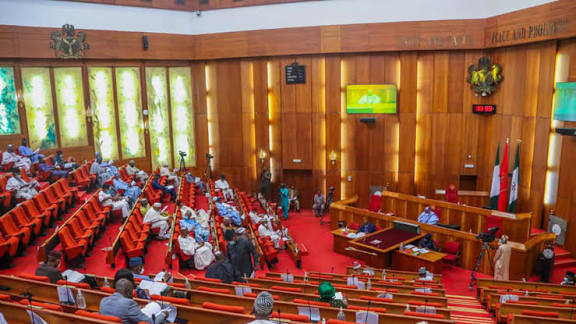
The current controversy surrounding the proposed amendments to the Electoral Act, particularly attempts to weaken or dilute the mandatory electronic transmission of election results from polling units to the INEC Result Viewing Portal (IREV), places Nigeria’s National Assembly in direct confrontation with the will of the people.
This is no ordinary legislative disagreement. It is a fundamental question of sovereignty, legitimacy, and democratic survival.
“The authority of government derives from the will of the governed.”
Thomas Jefferson
When lawmakers appear to legislate against that will, they cease to be representatives and risk becoming adversaries of the people they swore to serve.
Democracy Belongs to the People, Not to Politicians
Section 14(2)(a) of the 1999 Constitution of the Federal Republic of Nigeria (as amended) is unambiguous:
“Sovereignty belongs to the people of Nigeria from whom government through this Constitution derives all its powers and authority.”
This single sentence should end the debate.
The National Assembly does not own Nigeria’s democracy.
Political parties do not own it.
Incumbents do not own it.
The people do.
Therefore, any reform of the Electoral Act must first answer one overriding question:
Does it strengthen or weaken the people’s power to freely choose their leaders?
If it weakens that power, it is unconstitutional in spirit—even if clothed in legislative technicalities.
Why Mandatory Electronic Transmission Matters
Nigeria’s painful electoral history is well documented:
• Ballot box snatching
• Result manipulation
• Collation-centre rewriting
• Ghost figures
• Disenfranchisement
Electronic transmission of results from polling units directly to IREV was introduced to break this chain of fraud.
The logic is simple:
1. Votes are cast.
2. Results are counted openly.
3. Result sheet is scanned via BVAS.
4. Uploaded instantly to IREV.
5. Citizens, parties, observers and courts all see the same figures.
This process removes human discretion from the most corruptible stage of elections manual collation.
“Technology is not neutral. It either empowers citizens or empowers those who would control them.”
Shoshana Zuboff
In Nigeria’s case, technology has clearly empowered citizens.
That empowerment is precisely what some political actors now seem determined to reverse.
A Global Standard Nigeria Is Already Embracing
Across democracies, electronic and digital result management is now routine:
• Brazil has used electronic voting nationwide for over two decades.
• India deploys Electronic Voting Machines with verifiable audit trails.
• Estonia conducts secure internet voting.
• Ghana uses biometric verification and electronic transmission of results.
Nigeria itself successfully deployed BVAS and IREV in recent election cycles, demonstrating both feasibility and public acceptance.
To suddenly argue that electronic transmission is “unsafe” or “unreliable” in the Jet Age of Artificial Intelligence, satellite communication, cloud computing and blockchain is intellectually dishonest.
Nigeria is not a technological island.
Nigeria is fully embedded in the global digital ecosystem.
If banks can process millions of transactions daily, if citizens can file visas, pay taxes, trade cryptocurrencies and hold virtual meetings across continents, then Nigeria can certainly transmit polling-unit results in real time.
The problem is not technology.
The problem is political will.
Legislating Against the People Is Democratic Suicide
When legislators move to weaken safeguards that protect vote integrity, they send a dangerous signal:
That elections should be negotiable.
That outcomes can be engineered.
That citizens’ votes are optional.
History warns where this path leads.
“Those who make peaceful revolution impossible will make violent revolution inevitable.”
John F. Kennedy
No society remains stable when citizens lose faith in ballots.
Electoral credibility is not merely a legal issue it is a national security issue.
Countries collapse not only from war, but from stolen legitimacy.
The Legislature Must Not Invite Judicial Chaos
Attempts to ambiguously redefine or limit electronic transmission will inevitably flood the courts with constitutional challenges.
Judges will be forced to interpret vague provisions.
Conflicting rulings will emerge.
Electoral outcomes will be trapped in endless litigation.
This creates exactly what Nigeria does not need:
judicialised democracy, where judges, not voters, become final arbiters of leadership.
A responsible legislature prevents such chaos through clarity, not confusion.
Diaspora Voices Are Watching
Millions of Nigerians in the diaspora professionals, scholars, investors, and advocates are observing these developments with deep concern.
They understand that democratic regression discourages:
• Foreign direct investment
• Diaspora remittances
• Skills return
• International partnerships
Democracy is Nigeria’s strongest diplomatic currency.
Undermining it weakens Nigeria’s standing in the world.
A Direct Message to the National Assembly
You were not elected to protect political careers.
You were elected to protect national destiny.
Your oath is not to party leaders.
Your oath is not to godfathers.
Your oath is to the Constitution and the people.
“The price of greatness is responsibility.”
Winston Churchill
History will remember this moment.
It will remember who stood with the people.
It will remember who stood against them.
There is no moral middle ground.
The People’s Mandate
Nigerians demand:
1. Mandatory electronic transmission of polling-unit results to IREV in real time.
2. Legal protection of BVAS and digital audit trails.
3. Severe penalties for any attempt to manipulate or bypass electronic processes.
4. Full transparency in collation and declaration of results.
Anything less is unacceptable.
Conclusion: Choose the Right Side of History
The National Assembly stands at a crossroads.
One path leads toward a stronger, credible, technologically anchored democracy.
The other leads backward into the dark corridors of rigging, mistrust and instability.
Nigeria’s future will be shaped by which path is chosen.
Let it be known:
The people are watching.
The world is watching.
History is recording.
Lawmakers must do the right thing.
Not tomorrow.
Not after elections.
Not under pressure.
But Now in good faith.
Godson Azu is a UK based International Relations and Politics Expert.

A really good blog and me back again.