Can President William Ruto and Former President Uhuru Kenyatta Honour, Sustain and Advance the Democratic Peace Legacy Ahead of the 2027 Elections?
By Godson Azu
As Kenya approaches another decisive electoral cycle in 2027, the country stands at an important crossroads in its democratic journey. The political atmosphere is once again becoming increasingly charged with competing interests, emerging alliances, presidential ambitions, political realignments, questions of national unity, and the unresolved challenge of reconciling political competition with national stability.
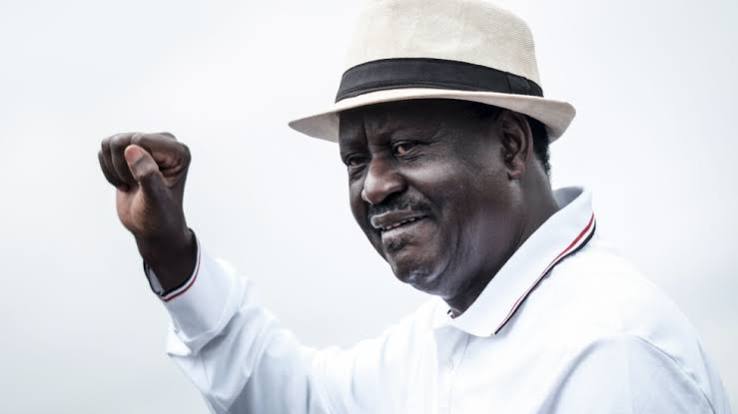
At the centre of this unfolding conversation lies the enduring legacy of the late former Prime Minister Raila Amolo Odinga—a political leader whose journey, struggles, alliances, disagreements, compromises and reconciliations significantly shaped the political history of modern Kenya.
Raila Odinga was more than a political opposition leader. He was a central figure in Kenya’s multiparty democratic struggle, constitutional transformation, political dialogue, national reconciliation and the evolving relationship between political power and the aspirations of ordinary citizens. His political life was characterised by resistance, resilience, controversy, sacrifice, negotiation and, at critical moments, the willingness to reach across political divides in the interest of national stability.
His historic political rapprochement with former President Uhuru Kenyatta in March 2018, popularly known as the Handshake, became one of the most consequential political developments in Kenya’s recent history. It demonstrated that even the deepest political rivalries, historical grievances and electoral disagreements could be addressed through dialogue, compromise and a shared commitment to national peace.
As Kenya prepares for the 2027 elections, the fundamental question is no longer simply what Raila Odinga achieved during his lifetime, but whether the political leaders he engaged, challenged, reconciled with and inspired can sustain the democratic values and political culture that his reconciliation initiatives sought to promote.
Can President William Ruto and former President Uhuru Kenyatta rise above their political differences and honour the democratic peace legacy of Raila Odinga?
THE HANDSHAKE: A HISTORIC BREAKTHROUGH IN KENYA’S POLITICAL DIVIDE
The March 9, 2018, Handshake between President Uhuru Kenyatta and Raila Odinga represented a defining moment in Kenya’s political history.
Following the bitter divisions, disputed electoral outcomes, political tensions and national uncertainty surrounding the 2017 elections, the two leaders chose to publicly embrace dialogue over confrontation. Their reconciliation challenged the traditional politics of rivalry, suspicion, ethnic mobilisation and winner-takes-all political competition.
The Handshake was not merely a personal reconciliation between two political leaders. It carried the symbolism of a possible national healing process—a recognition that Kenya could not indefinitely remain trapped in cycles of political hostility, ethnic polarisation and electoral antagonism.
The initiative gave birth to the Building Bridges Initiative (BBI), which sought to address questions of inclusivity, national cohesion, governance, political representation and the historical divisions that have repeatedly threatened Kenya’s stability. Although the BBI constitutional reform process ultimately failed in court, the political significance of the Handshake itself remained an important lesson in the possibilities of political dialogue.
Raila and Uhuru demonstrated that political disagreement need not translate into permanent hostility, and that the national interest must sometimes transcend personal ambition, party loyalty and electoral grievances.
The message was profound: political competitors can disagree, campaign against one another, contest power and still recognise their shared responsibility to preserve the peace, unity and stability of their country.
That is perhaps one of the most important democratic lessons Kenya must carry into 2027.
FROM THE ODINGA–KENYATTA RIVALRY TO A NEW POLITICS OF RECONCILIATION
For decades, the political relationship between the Odinga and Kenyatta families has carried enormous historical, symbolic and political significance in Kenya.
The relationship reflects a wider national history of competing political traditions, ideological differences, regional identities, historical grievances and the evolving struggles over power, political inclusion and national identity.
The political divide has often been interpreted through ethnic lenses, particularly the historical relationship between the Luo and Kikuyu political communities. However, Kenya’s democratic future cannot continue to be defined exclusively by ethnic arithmetic, inherited political loyalties or the historical rivalry of political families.
The Raila–Uhuru Handshake represented an opportunity to transcend these traditional divisions and create a new political precedent in which dialogue, compromise and national interest could become stronger than inherited political antagonisms.
The reconciliation was not an erasure of history, nor did it suggest that political differences had disappeared. Rather, it demonstrated that history should inform a nation’s progress without permanently imprisoning its people within the conflicts of the past.
The challenge before Kenya’s political leaders is to ensure that the peace and reconciliation achieved between Raila and Uhuru do not become a temporary arrangement that disappears with their political separation or the passing of one of its principal architects.
The political legacy must evolve beyond the Odinga and Kenyatta families. It must become a national democratic culture that embraces every community, political party, generation and citizen.
Kenya must move from ethnic politics to issue-based politics; from political inheritance to democratic participation; from personal rivalries to institutional accountability; and from the politics of exclusion to the politics of inclusion, opportunity and shared national prosperity.
RAILA ODINGA: THE POLITICS OF DIALOGUE, COMPROMISE AND NATIONAL SURVIVAL
Raila Odinga’s political legacy is complex, contested and deeply consequential. He was a political fighter who spent much of his career challenging power, demanding democratic reforms and contesting the political status quo. Yet he was also a political negotiator who understood that confrontation alone could not always deliver national stability or sustainable political progress.
Throughout his political journey, Raila repeatedly engaged political adversaries, including leaders with whom he had previously experienced deep disagreements.
His 2008 power-sharing arrangement following the disputed 2007 elections, his 2018 reconciliation with Uhuru Kenyatta, and his subsequent engagement with President William Ruto’s administration illustrated a recurring pattern in his politics: confrontation when necessary, negotiation when possible, and compromise when he believed the national interest demanded it.
Critics sometimes interpreted his political compromises as tactical manoeuvres or calculations of power. Supporters viewed them as evidence of political maturity, pragmatism and an understanding of the dangers of prolonged political instability.
Whatever interpretation one adopts, the enduring lesson is that political dialogue should not be regarded as weakness, and compromise should not automatically be equated with betrayal.
“Better half a loaf than nothing. We must slay this ghost called tribalism.”
That statement captures a central principle of democratic peacebuilding: the pursuit of political victory must not become more important than the preservation of human life, national unity and the future of a country.
“We shake hands not because we agree, but because we must move forward.”
These sentiments remain relevant to Kenya today. Democratic politics does not demand that leaders agree on everything. It demands that they recognise the boundaries of disagreement, respect constitutional processes, preserve peace and ensure that political competition does not become a threat to the nation itself.
RUTO, UHURU AND THE RESPONSIBILITY OF THE POLITICAL LEADERSHIP
President William Ruto and former President Uhuru Kenyatta occupy important positions in Kenya’s contemporary political history and will remain influential actors in the political developments leading to 2027.
Their relationship has undergone a dramatic transformation—from political allies who jointly led the country for two terms, to bitter political adversaries following their falling-out during the latter years of the Kenyatta administration.
Their disagreement has become increasingly visible as political alliances, opposition coalitions and regional political networks reposition themselves ahead of the next presidential election.
Yet Kenya’s future should not be held hostage to the political disagreements between its leaders.
President Ruto, as the incumbent Head of State, carries a constitutional and political responsibility to protect democratic institutions, guarantee the rights of citizens, respect freedom of expression, maintain national security within the law, and ensure that the electoral environment remains peaceful, transparent and credible.
Former President Uhuru Kenyatta, as a former Head of State with considerable political experience and influence, equally has an important responsibility to encourage responsible political engagement, national cohesion, institutional respect and peaceful democratic participation.
Neither leader should allow personal grievances, political competition, regional interests or the pursuit of electoral advantage to undermine the national peace that generations of Kenyans have struggled to preserve.
Their disagreement is their political right. Their rivalry is part of democratic competition. But the preservation of Kenya’s democracy must remain a shared responsibility.
The question is whether both men can demonstrate that political rivalry does not have to become national division—and that political leadership is measured not only by the ability to mobilise supporters, but also by the wisdom to prevent a country from being pushed towards instability.
RAILA’S FINAL POLITICAL RECONCILIATION AND THE 2027 QUESTION
Raila Odinga’s engagement with President William Ruto and the political cooperation formalised between their parties in March 2025 further complicated the traditional boundaries between government and opposition in Kenya.
The arrangement was presented as a framework for dialogue, national development, policy cooperation and addressing key national challenges. It also attracted criticism from political actors and citizens who feared that cooperation might weaken opposition oversight, dilute accountability or compromise the democratic role of opposition politics.
These concerns deserve serious consideration.
A democratic society requires dialogue between political actors, but it equally requires a credible opposition capable of questioning government policies, scrutinising public spending, defending civil liberties and demanding accountability.
Cooperation must never mean the abandonment of democratic oversight. National dialogue must never become an instrument for silencing dissent. Political consensus must never be imposed at the expense of citizens’ constitutional rights.
Raila’s legacy should therefore not be interpreted as a blanket endorsement of political alliances, power-sharing arrangements or unconditional cooperation with whoever occupies the presidency.
His legacy should be understood as the courage to engage, the wisdom to compromise, the willingness to seek peace and the determination to pursue political solutions without surrendering the fundamental principles of democracy.
The test of political cooperation is not how many leaders share a platform, sign an agreement or exchange public compliments. It is whether their cooperation delivers meaningful improvements in the lives of citizens, strengthens institutions, promotes transparency, protects freedoms and addresses the social and economic challenges confronting the country.
THE GEN-Z GENERATION AND THE NEW POLITICAL REALITY
The emerging political reality in Kenya cannot be understood without acknowledging the influence, frustrations and aspirations of the younger generation.
The Gen-Z protests of 2024 represented a significant shift in Kenya’s political engagement. They challenged conventional political structures, questioned the legitimacy of elite-driven arrangements, demanded accountability and exposed the growing frustration of citizens who felt disconnected from the political establishment.
The movement demonstrated that young people are not necessarily loyal to traditional political families, ethnic voting blocs or established party structures. Many are increasingly concerned about the cost of living, unemployment, taxation, corruption, public debt, governance, transparency, social justice and the future of their country.
The political lesson is unmistakable: Kenya’s political leadership cannot assume that traditional political alliances, regional mobilisation or ethnic loyalties will automatically determine the outcome of the 2027 elections.
A new generation is demanding a different politics—one based on accountability, credible leadership, opportunity, participation, constitutionalism and measurable results.
Raila’s democratic legacy must therefore be interpreted in the context of this generational transformation.
The politics of dialogue and reconciliation must not be confined to discussions between presidents, former presidents, party leaders and political elites. It must extend to the people, particularly the young citizens who are demanding that democracy deliver tangible benefits beyond election campaigns and political promises.
The future of Kenya’s democracy depends on whether political leaders can listen to this generation without fear, contempt or political manipulation.
THE 2027 ELECTIONS: A TEST OF DEMOCRATIC MATURITY
The August 10, 2027, General Election will represent more than another contest for the presidency, parliamentary seats, governorships and county leadership.
It will be a defining test of Kenya’s democratic maturity, national cohesion and constitutional resilience.
The contest is already taking shape around competing political alliances, government performance, opposition unity, regional political interests, the future of ODM, the influence of former political leaders, the aspirations of young voters and the struggle to establish a credible alternative political vision.
President Ruto and his supporters will seek to defend the administration’s record and pursue another mandate. Opposition leaders and political formations will seek to present alternative policies, leadership and direction. Citizens will be expected to make their choices through the ballot box.
But regardless of who wins or loses, Kenya must not return to the destructive politics of electoral violence, intimidation, ethnic hostility, political exclusion or the rejection of constitutional processes.
The 2027 elections must be an opportunity to deepen democratic participation, strengthen electoral institutions, promote issue-based campaigning and demonstrate that political competition can occur without threatening the unity and security of the nation.
The Independent Electoral and Boundaries Commission (IEBC), political parties, security agencies, civil society, the media, religious institutions, community leaders and citizens all have a responsibility to protect the integrity of the electoral process.
Electoral credibility must be established before election day—not merely defended after the results are announced.
Transparency, preparedness, impartiality, public confidence, voter education, credible dispute-resolution mechanisms and the protection of citizens’ rights will be essential to ensuring that the outcome is respected.
Kenya must not allow the 2027 elections to become another opportunity for political grievances to be weaponised against its people.
PEACE MUST NOT BE A POLITICAL TRANSACTION
One of the greatest dangers facing African democracy is the tendency to treat peace as a political transaction between powerful individuals rather than as a constitutional right and collective responsibility of citizens.
Peace should not depend on whether two political leaders are friends, whether parties have entered into an alliance, whether regional interests have been accommodated, or whether political elites have negotiated a share of government.
True democratic peace must be sustainable beyond the personalities who initiate it.
It must be anchored in strong institutions, constitutional protections, responsible political parties, credible elections, an independent judiciary, accountable security agencies, respect for human rights and a citizenry that is empowered to participate in determining its own future.
The Raila–Uhuru Handshake was significant because it offered a pathway away from confrontation. Its true legacy will depend on whether Kenya can institutionalise the spirit of dialogue and reconciliation that it represented.
The country must build a democracy in which political disagreement is not a declaration of war; opposition is not treated as an enemy of the state; peaceful protest is not criminalised; and electoral competition does not become a threat to life, liberty or national unity.
Peace without justice is fragile. Reconciliation without accountability is incomplete. Political consensus without public participation is inadequate. And democracy without the freedom to challenge power is merely an illusion.
A CALL TO PRESIDENT RUTO, FORMER PRESIDENT UHURU AND KENYA’S POLITICAL LEADERS
As Kenyans prepare for the 2027 elections, it is our earnest hope and expectation that President William Ruto, former President Uhuru Kenyatta, leaders of ODM, the opposition coalition, political parties, the national and county leadership, and all influential political actors will recognise the greater responsibility they owe to Kenya.
The legacy of Raila Odinga should inspire a new commitment to peaceful political engagement, democratic dialogue, national reconciliation, constitutional integrity and responsible leadership.
President Ruto should ensure that his administration creates an environment in which all citizens, including those who oppose his government, can freely exercise their constitutional rights and participate in the electoral process without fear.
Former President Uhuru Kenyatta should continue to use his experience and influence to encourage political restraint, national unity and responsible opposition engagement, ensuring that political differences do not translate into hostility, ethnic division or instability.
Opposition leaders must equally rise above individual presidential ambitions, personal rivalries and regional calculations to articulate a credible alternative programme for Kenya’s future.
The responsibility is collective. No political party, leader, ethnic community, regional constituency or individual should place its political ambitions above the peace, security and democratic future of Kenya.
THE FUTURE OF KENYA MUST BE GREATER THAN ITS POLITICAL DIVISIONS
The Kenya that Raila Odinga, Uhuru Kenyatta, William Ruto and generations of political leaders have shaped must ultimately belong to its citizens—not to political dynasties, parties, ethnic alliances or the ambitions of individuals.
The democratic future of Kenya must be built on the principles of equality, justice, inclusion, accountability, constitutionalism, peaceful coexistence, economic opportunity and respect for human dignity.
The 2027 elections should not be a referendum on the personal relationships or political disagreements between Ruto and Uhuru alone. Nor should they become an attempt by political actors to inherit, monopolise or weaponise the legacy of Raila Odinga.
Instead, the elections should be a referendum on governance, leadership, policies, economic performance, national development, democratic freedoms and the aspirations of the Kenyan people.
Raila’s legacy belongs to Kenya. It must not be reduced to political slogans, campaign rhetoric, party interests or the selective invocation of his name.
The greatest honour his political contemporaries can pay him is to sustain the culture of peace, dialogue, compromise and national reconciliation that he championed at critical moments in Kenya’s history.
CONCLUSION: THE HANDSHAKE MUST OUTLIVE ITS ARCHITECTS
The historic Handshake between Raila Odinga and Uhuru Kenyatta was a powerful reminder that political adversaries can choose dialogue over division, reconciliation over hostility, and the national interest over the pursuit of political revenge.
The challenge before Kenya today is to ensure that this lesson survives beyond its architects.
As President William Ruto and former President Uhuru Kenyatta navigate their differences, and as political leaders prepare for the 2027 General Election, the country must remember that the preservation of peace is not the responsibility of presidents alone. It belongs to every political leader, every party, every institution, every community and every citizen.
The future of Kenya must not be determined by the politics of hatred, ethnic rivalry, political vengeance or electoral manipulation. It must be shaped by the collective wisdom of a people who understand that democracy is not merely about winning power, but about preserving the nation, protecting freedoms, respecting the will of the electorate and creating a better future for generations to come.
Raila Odinga may no longer be physically present to participate in the political conversations, negotiations and electoral contests that lie ahead, but the principles of dialogue, democratic struggle, compromise and national reconciliation that defined important chapters of his political journey remain relevant.
The question is whether Kenya’s political leaders will rise to the occasion.
Can Ruto and Uhuru honour the legacy of Raila’s democratic peace accord?
Can Kenya’s political class demonstrate that dialogue is stronger than division, democracy is greater than individual ambition, and national unity is more important than political victory?
Can the 2027 elections become a defining moment in Kenya’s democratic history—a peaceful, credible, progressive and people-centred electoral process that strengthens the nation rather than divides it?
The answer must be YES.
Kenya deserves peace. Kenya deserves democracy. Kenya deserves credible elections. Kenya deserves responsible leadership.
And the legacy of Raila Odinga must be that his historic reconciliations did not merely bring political leaders together—but helped build a nation capable of sustaining peace, democracy, justice and progress long after the handshake.
Let the Handshake become a legacy. Let dialogue become a culture. Let democracy become a covenant with the people. And let peace be the greatest victory of the 2027 elections.
Godson Azu
International Development Expert | Global Affairs Analyst | Leadership & Good Governance Consultant | Pan-Africanist
The Raila Odinga Democratic Peace Accord Legacy |