
By Godson Azu
Across the African continent, a silent but powerful revolution is taking place. From Lagos to Nairobi, Kigali to Dakar, young innovators, technology entrepreneurs, fintech founders, and digital policy advocates are redefining the future of commerce, governance, and financial inclusion. Africa is no longer viewed merely as an emerging market; increasingly, it is becoming a strategic digital innovation hub with the potential to shape the future of global financial technology.
With Africa’s population projected to reach nearly 2.5 billion by 2050, and with more than 60 percent of its population under the age of 25, the continent represents one of the youngest and most dynamic digital markets in the world. According to the World Bank and the African Development Bank, digital transformation across Africa could add hundreds of billions of dollars to the continent’s GDP over the next decade, particularly through fintech innovation, mobile banking, AI-driven services, e-commerce, and digital infrastructure development.
The rise of Africa’s digital economy is not accidental. It is being driven by resilience, creativity, youthful entrepreneurship, and the urgent necessity to solve longstanding socio-economic challenges through technology. Today, African innovators are increasingly arriving at the global table of engagement not merely as participants, but as contributors of value, identity, innovation, and transformative solutions.
One of the emerging institutions helping to shape this digital transformation ecosystem is Fluidtech, a hardware and software development and fintech solutions company founded in 2020 by Dr George Manuwuike, a Nigerian-Ukrainian Fintech Entrepreneur alongside his Ukrainian partner. The company represents a growing generation of African technology enterprises seeking to bridge the gap between traditional cash economies and modern digital financial systems.
The name “Fluidtech” itself reflects the philosophy of adaptability, flow, and technological ease — a system designed to mold into customers’ needs while simplifying complex financial and transactional processes. At its core, the company’s mission is to create user-friendly software and payment infrastructure that seamlessly integrates into everyday business operations and financial transactions between individuals, institutions, and digital systems.
In many African countries, cash transactions still dominate significant portions of the informal and semi-formal economy. The International Monetary Fund (IMF) and the United Nations Economic Commission for Africa have consistently highlighted that financial exclusion remains one of the greatest barriers to economic development on the continent. Yet Africa simultaneously leads the world in mobile money adoption, with countries such as Kenya, Ghana, Nigeria, Senegal, and Côte d’Ivoire witnessing rapid growth in digital payment ecosystems.
This is where companies like Fluidtech are positioning themselves strategically.
Fluidtech has developed innovative cash-to-digital technologies aimed at helping people in frontier markets transition from heavily cash-reliant economies into digitally enabled and increasingly cashless societies. The company’s innovative teams have spent over a decade building and refining payment kiosk systems that simplify digital transactions for businesses and consumers alike.
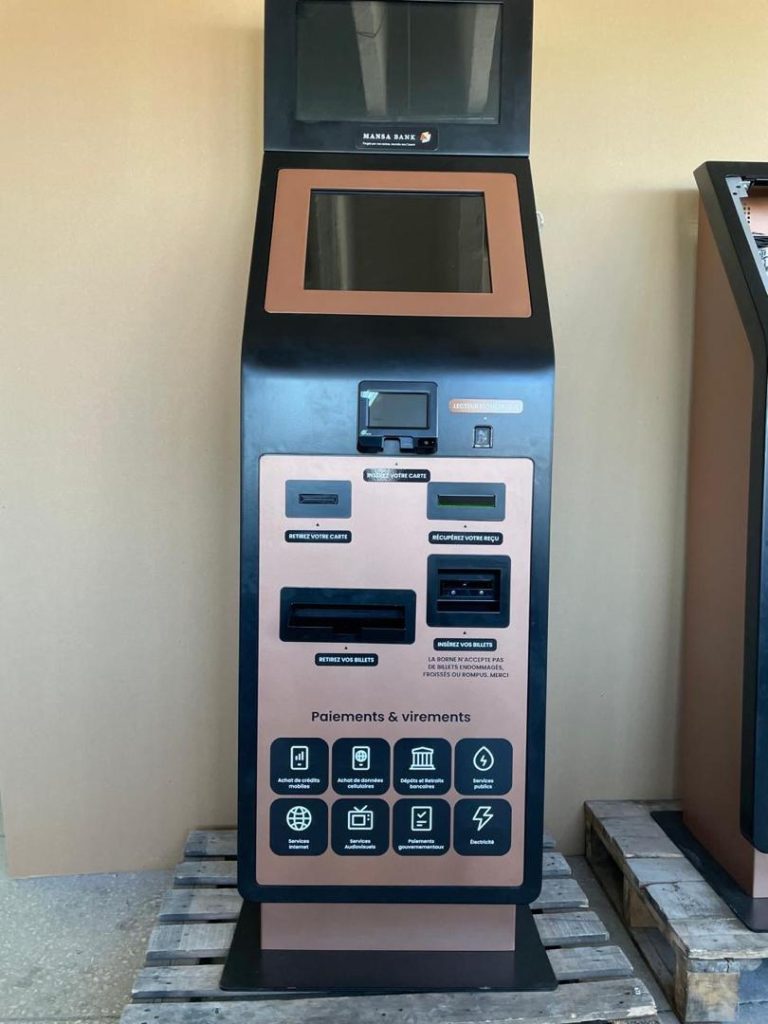
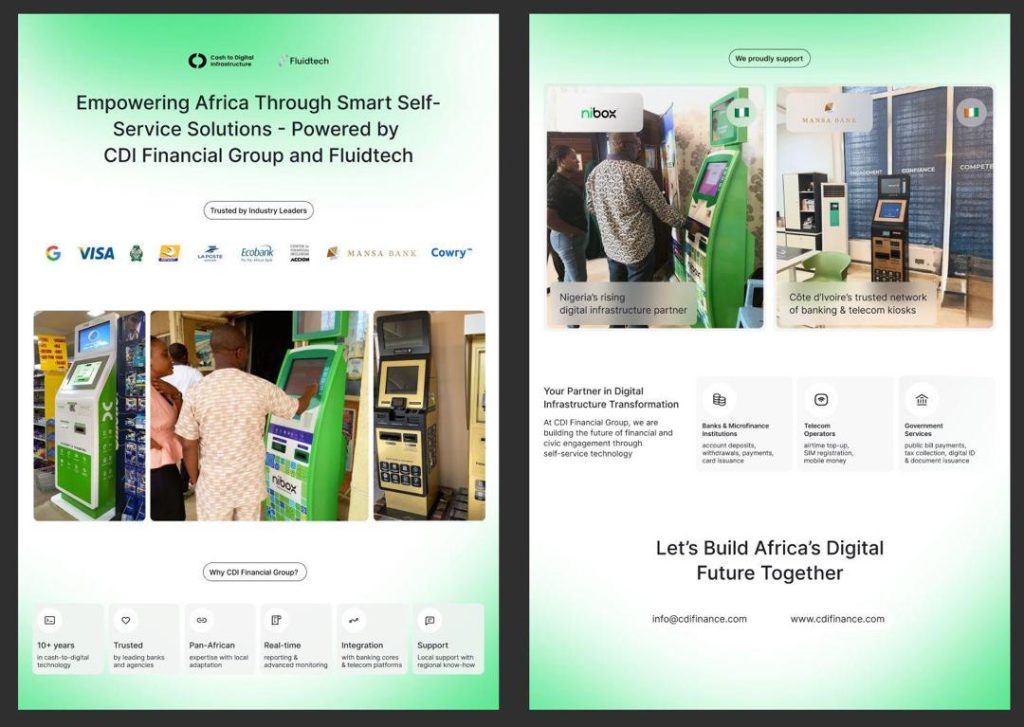
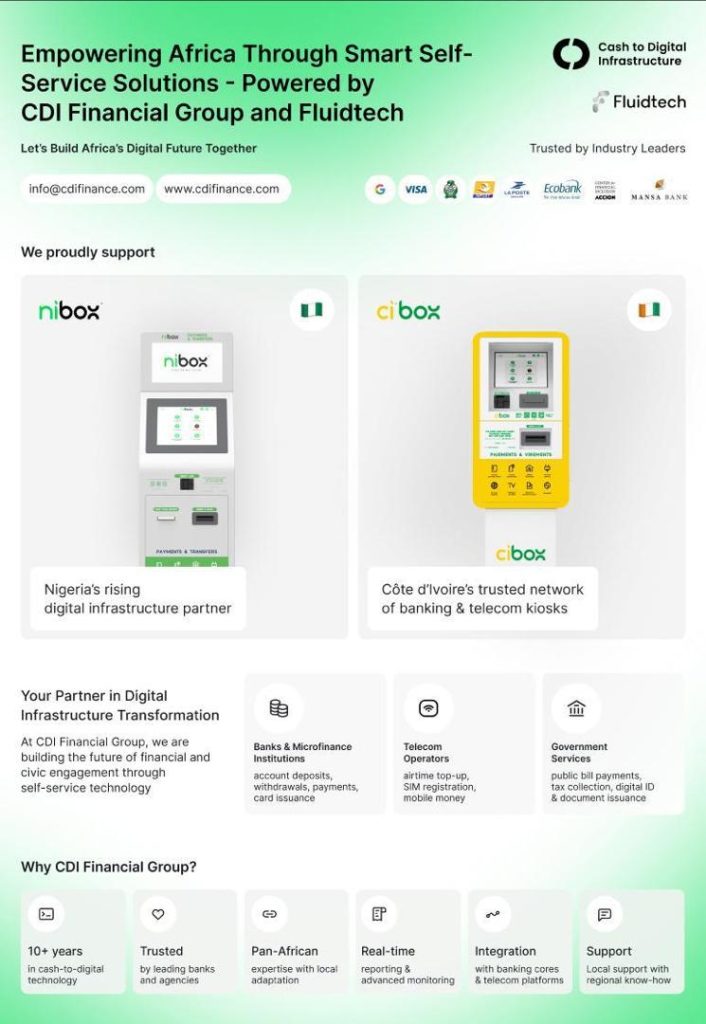
The journey began with one of its earlier systems known as “Nibox,” a payment kiosk solution developed and deployed in Nigeria. Over time, that platform evolved into a newer and more advanced system now known as the “Fluidtech Kiosk,” representing a more integrated and scalable digital infrastructure model designed to support modern financial transactions, self-service payments, and digital accessibility.
Having closely observed the steady growth and progress of the company over the years, it is evident that the organisation has fostered a culture of entrepreneurship, innovation, and technological resilience. Beyond merely developing hardware and software solutions, Fluidtech continues to contribute to Africa’s broader ambition of becoming a competitive global player in the digital economy.
Importantly, the company’s activities also reflect growing awareness around Environmental, Social and Governance (ESG) responsibilities within Africa’s evolving technology ecosystem. In a time when global investors increasingly prioritise sustainability and social impact, African fintech companies are recognising that innovation must also deliver measurable community value.
Fluidtech’s self service payment kiosks do not only facilitate revenue generation and digital transactions; they also contribute to job creation for Africa’s expanding youthful population. More significantly, the company’s model seeks to empower local communities traditionally underrepresented in mainstream economic participation by enabling them to become owners, operators, and beneficiaries of self-service payment infrastructure.
Currently, some of these payment kiosk systems have reportedly been deployed and are operational in countries such as Nigeria and Côte d’Ivoire, while negotiations are ongoing with other neighbouring countries, demonstrating the growing regional relevance of African-built digital payment technologies across West Africa.
Africa’s fintech sector itself has become one of the continent’s strongest magnets for investment. Reports from Partech Africa and other international investment monitoring agencies indicate that fintech consistently attracts the largest share of startup funding on the continent. Digital payments, cross-border remittances, agency banking, mobile commerce, and AI-enabled financial services are rapidly transforming how Africans interact with money and economic systems.
The African Continental Free Trade Area (AfCFTA) further strengthens this opportunity by opening pathways for cross-border digital trade, regional payment systems, and integrated financial ecosystems. Experts increasingly argue that Africa’s digital future will depend heavily on local technology companies developing indigenous solutions capable of addressing uniquely African challenges.

Nevertheless, while the opportunities are enormous, the challenges remain significant.
For Africa to fully harness the benefits of the Fourth Industrial Revolution, governments across the continent must continue to pursue responsive, responsible, and sustainable digital policies. Issues such as cyber security, digital identity management, internet accessibility, electricity infrastructure, regulatory consistency, data protection, AI governance, and ease of doing business must remain at the forefront of policy discussions.
A stable, transparent, and accountable society will always create the enabling environment necessary for economic growth, innovation, and prosperity. Investors are naturally attracted to systems where governance structures are predictable, infrastructure is reliable, and institutions support innovation.
There is also an increasing need for stronger collaboration between governments, private sector stakeholders, diaspora investors, development institutions, and technology innovators. Africa’s digital transformation cannot be achieved in isolation. It requires collective participation, policy coherence, long-term investment, and visionary leadership.
At CaterandMerger Consult UK, we continue to facilitate strategic engagements and collaborative partnerships with the Fluidtech team as it advances its new digital infrastructure and transformational payment solution system, the “Fluidtech Kiosk.”
As the world accelerates towards AI-powered economies, digital governance, smart financial systems, and cashless societies, Africa must not remain a passive observer. Rather, the continent must continue to position itself as an active architect of the future global digital economy.
The future of Africa’s digital transformation will not merely be defined by imported technologies, but by African innovators building scalable solutions for African realities — solutions driven by resilience, innovation, sustainability, inclusion, and technological excellence.
Indeed, the emergence of companies such as Fluidtech reflects a broader continental narrative: Africa is not waiting for the future; Africa is increasingly creating it.
Mazi Godson Azu is a UK-based International Relations and Politics Expert, Commentator, Author and Consultant specialising in diplomacy, governance, diaspora engagement, trade and international affairs. A member of IoD Africa Group
Fluidtech Software SAS, France is a subsidiary of CDI Holdco Ltd, UK (CDI – Cash to Digital Infrastructure).