Part Three: Beyond Godfathers—Building a Republic Governed by Institutions Rather Than Individuals
Can a Nation Truly Develop Under Political Godfatherism?
This question lies at the heart of Nigeria’s democratic dilemma.
History demonstrates that political godfatherism is neither entirely beneficial nor entirely destructive. Its impact depends on the character of the political actors involved, the strength of democratic institutions, and the constitutional culture within which political influence is exercised.
In some circumstances, an experienced political leader who mentors and develops future leaders can provide continuity in governance, policy stability, and institutional memory. Political mentorship, when exercised within democratic boundaries, can strengthen political parties, nurture competent leadership, and reduce instability during periods of succession.
However, when political influence evolves into absolute control over elected officials and public institutions, the consequences become more troubling. Governance risks becoming subordinate to private political interests rather than the constitutional mandate entrusted to elected officeholders. Public accountability may weaken, independent institutions may be compromised, and political competition can be constrained.
The challenge, therefore, is not simply the existence of influential political figures; it is whether democratic institutions possess sufficient independence to ensure that no individual—regardless of stature—stands above constitutional processes.
Rivers State and the Contemporary Debate
The political developments in Rivers State have reignited national conversations regarding political succession, constitutional authority and democratic accountability.
His Excellency Hon. Nyesom Wike has become one of the most consequential political figures of the Fourth Republic. Admirers regard him as a master strategist, a formidable organiser and an exceptionally effective builder of political structures. They argue that his influence reflects years of political experience, organisational discipline and electoral success.
Critics, however, contend that the concentration of political influence in any one individual may generate institutional tensions, particularly where differing expectations arise between former leaders and their successors.
These differing perspectives illustrate why Rivers State has become a significant case study in contemporary Nigerian politics. The state’s experience is increasingly examined alongside the political succession model associated with Lagos State. Both examples highlight the opportunities and challenges that emerge when influential political leaders seek to sustain long-term political legacies.
Whether the Rivers model ultimately develops into an enduring institutional tradition or remains primarily associated with the influence of individual personalities will depend on future political developments, the resilience of democratic institutions, and the willingness of political actors to resolve differences within constitutional frameworks.
The Collapse of Institutions: Nigeria’s Greatest Democratic Risk
The greatest danger confronting Nigeria is not political competition itself; healthy competition is fundamental to democracy. Rather, the greater danger is the gradual erosion of institutions whenever personal influence eclipses constitutional authority.
A nation cannot achieve lasting democratic stability if:
- political parties become dependent upon individuals rather than internal democracy;
- legislatures lose their independence;
- the judiciary is perceived as politically vulnerable;
- public institutions are weakened by patronage;
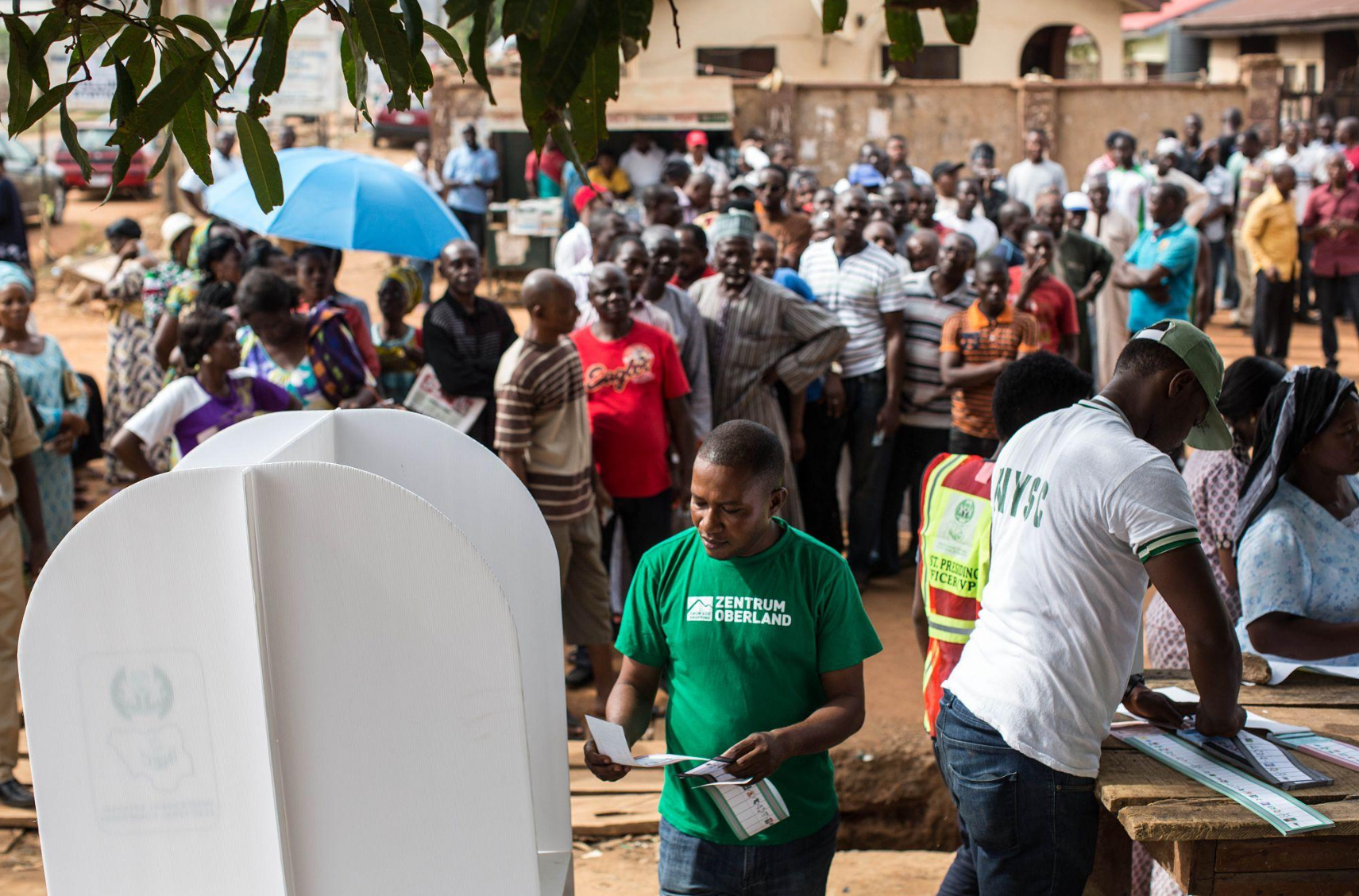
- electoral processes fail to command public confidence; or
- public service appointments are driven primarily by loyalty rather than competence.
Strong institutions are the bedrock of democratic resilience. They provide continuity when governments change and ensure that political transitions occur peacefully and predictably.
How Nigeria Can Reduce the Influence of Political Godfatherism
If Nigeria is to consolidate its democracy, several reforms deserve sustained attention.
First, political parties should deepen internal democracy by ensuring transparent candidate selection and competitive leadership contests.
Second, electoral reforms should continue to strengthen the independence, credibility and transparency of election administration.
Third, the judiciary must remain independent and adequately protected from undue political pressure, enabling it to serve as an impartial guardian of constitutional order.
Fourth, anti-corruption institutions should be strengthened to enforce accountability regardless of political affiliation or status.
Fifth, civic education should be expanded so that citizens increasingly evaluate candidates on competence, integrity and public service rather than patronage networks or ethnic and regional loyalties.
Finally, political office should increasingly be understood as a public trust rather than a personal entitlement. Democratic leadership flourishes where constitutional responsibility prevails over individual ambition.
Principles of Transformational Political Leadership
The enduring measure of leadership is not the accumulation of influence but the quality of institutions left behind.
A transformational political leader should demonstrate:
- unwavering integrity and ethical conduct;
- fidelity to the Constitution and the rule of law;
- accountability and transparency in public office;
- respect for institutional independence;
- the ability to build consensus across political divides;
- a commitment to inclusion and national cohesion;
- investment in future generations of leaders through mentorship rather than dependency;
- strategic vision balanced with humility; and
- an understanding that enduring legacies are built through institutions rather than personalities.
The most successful leaders are remembered not because they controlled political systems indefinitely, but because they strengthened those systems for future generations.
Conclusion: The Future of Nigeria’s Democracy
Nigeria now stands at a defining moment in its democratic evolution.
The country has produced remarkable political strategists, accomplished administrators, influential party organisers and nationally recognised statesmen. Their contributions have shaped the trajectory of the Fourth Republic in profound ways.
Yet history ultimately judges political leaders not only by the elections they win or the alliances they build, but by the democratic institutions they strengthen.
The enduring lesson from Lagos, Rivers and other political theatres across Nigeria is that while individuals may dominate political eras, institutions determine the longevity of democratic societies.
Political godfathers may emerge and political alliances may shift. Governments will change, parties will rise and fall, and personalities will come and go. What must remain constant is the supremacy of the Constitution, the independence of democratic institutions and the sovereign will of the Nigerian people.
Nigeria’s democratic future should not depend upon the influence of any single individual, however gifted or politically accomplished. It should rest upon institutions that are transparent, accountable, resilient and trusted by all citizens.
Political mentorship is valuable. Political organisation is essential. Strategic leadership is indispensable. But democracy reaches its highest expression only when institutions are stronger than personalities and when public office is exercised in service of the people rather than in service of political patronage.
The survival of the Nigerian nation-state in the twenty-first century will depend not on the triumph of political godfathers, but on the triumph of constitutional democracy, institutional integrity and visionary leadership committed to the common good.
— Mazi Godson Azu, MA, BA (Hons), FOSHA, AMILM, MID, MIoD, MIoG
International Development Expert, Global Affairs Analyst, Leadership and Good Governance Consultant, and Convener of the London Political Summit and Awards (LPSA).